


Quick answer: On 7 October S&P Global Ratings published its outlook for Dubai's residential market, and its base case is that Middle East disruption continues into 2027. Combined with large deliveries due in 2027–28, S&P says that could speed up the price correction, particularly in investor-driven apartments. Monthly sales transactions have averaged about 26% below pre-conflict levels (12,644 from March to September, against 17,198 in January and February), and industry estimates put price falls at 5–15% by segment since the end of 2025. S&P still expects a gradual adjustment rather than a collapse, because more buyers are long-term residents, the four developers it rates hold large contracted backlogs, and, if geopolitical risk subsides in 2027, it expects prices to stabilise despite the extra supply.
This article summarises a ratings agency's published assessment, as reported in the press. S&P's full report is behind a subscription, so everything attributed to S&P below comes from its public statements and the coverage of them. It is market analysis, not a forecast of our own, and it does not comment on the conflict itself.
Most of the headlines about Dubai property this autumn describe what has already happened. S&P's report is different because it is about what comes next, from an agency whose job is to judge whether developers and banks can withstand a downturn. That makes it one of the more useful documents of the year, and one of the more misread. Here is what it says, what the numbers behind it show, and what it means depending on where you sit.
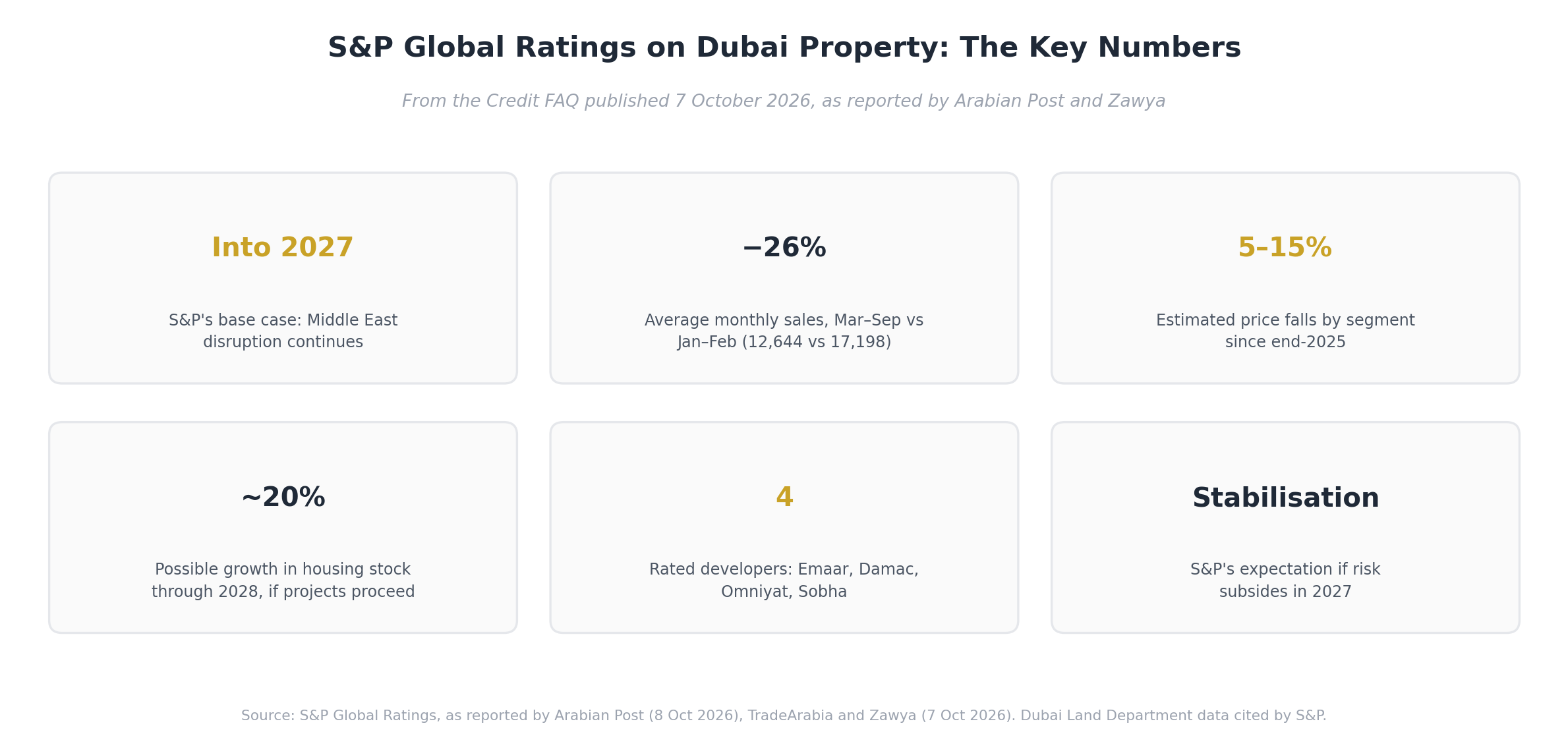
Fig. 1 — The key numbers from S&P Global Ratings' Credit FAQ on Dubai residential property, published 7 October 2026. Source: S&P Global Ratings as reported by Arabian Post, TradeArabia and Zawya.
What S&P Actually Said
The Credit FAQ, titled "How Will The Middle East War Reshape Dubai's Residential Property Market in 2027?", covers prices, developers' credit ratings, liquidity and funding, and banks' exposure to a potential correction. Its core message has three parts.
- The base case is that disruption continues into 2027. S&P explains why prices have fallen only moderately in the seven months since the conflict began, and expects pressure to build if that persists.
- Supply is the amplifier. With large deliveries due in 2027 and 2028, S&P says price correction could accelerate, particularly in investor-driven apartment segments.
- Collapse is not the expectation. The agency expects a gradual adjustment, and if geopolitical risk subsides in 2027 it expects residential prices to stabilise despite the additional supply.
The Numbers Behind It: Volumes Down, Prices Down Moderately
S&P cites Dubai Land Department data showing monthly sales transactions averaged 12,644 between March and September, against 17,198 in January and February. That is a fall of about 26%.
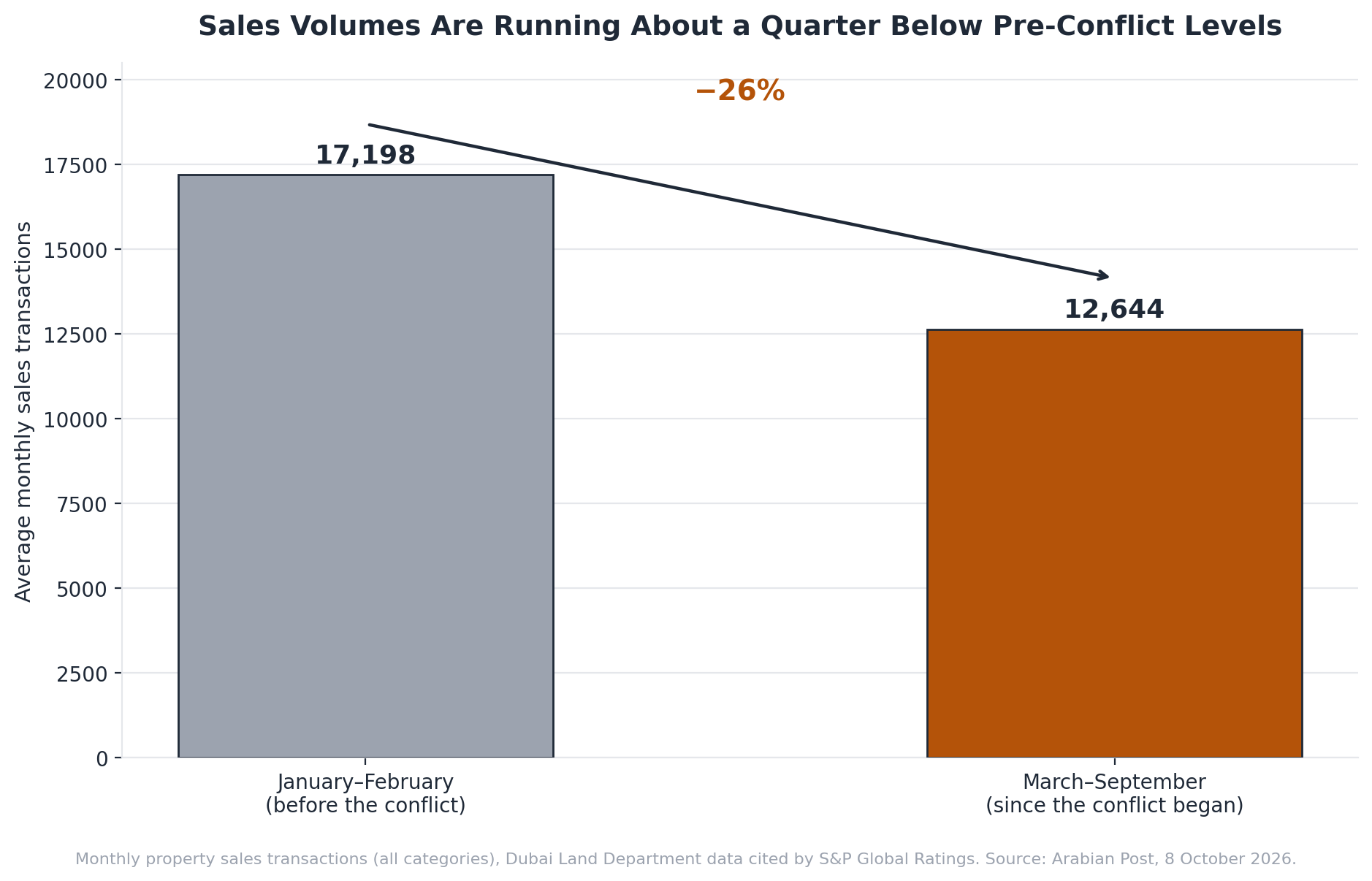
Fig. 2 — Average monthly sales transactions before and after the conflict began. Source: Dubai Land Department data cited by S&P Global Ratings, via Arabian Post, 8 October 2026.
On prices, S&P points to industry estimates of falls between 5% and 15% across segments since the end of 2025. That range sits comfortably alongside the best valuation data we have: ValuStrat's index is about 10.2% below its February level and 3.1% below a year earlier, as we covered in our September 2026 market review.
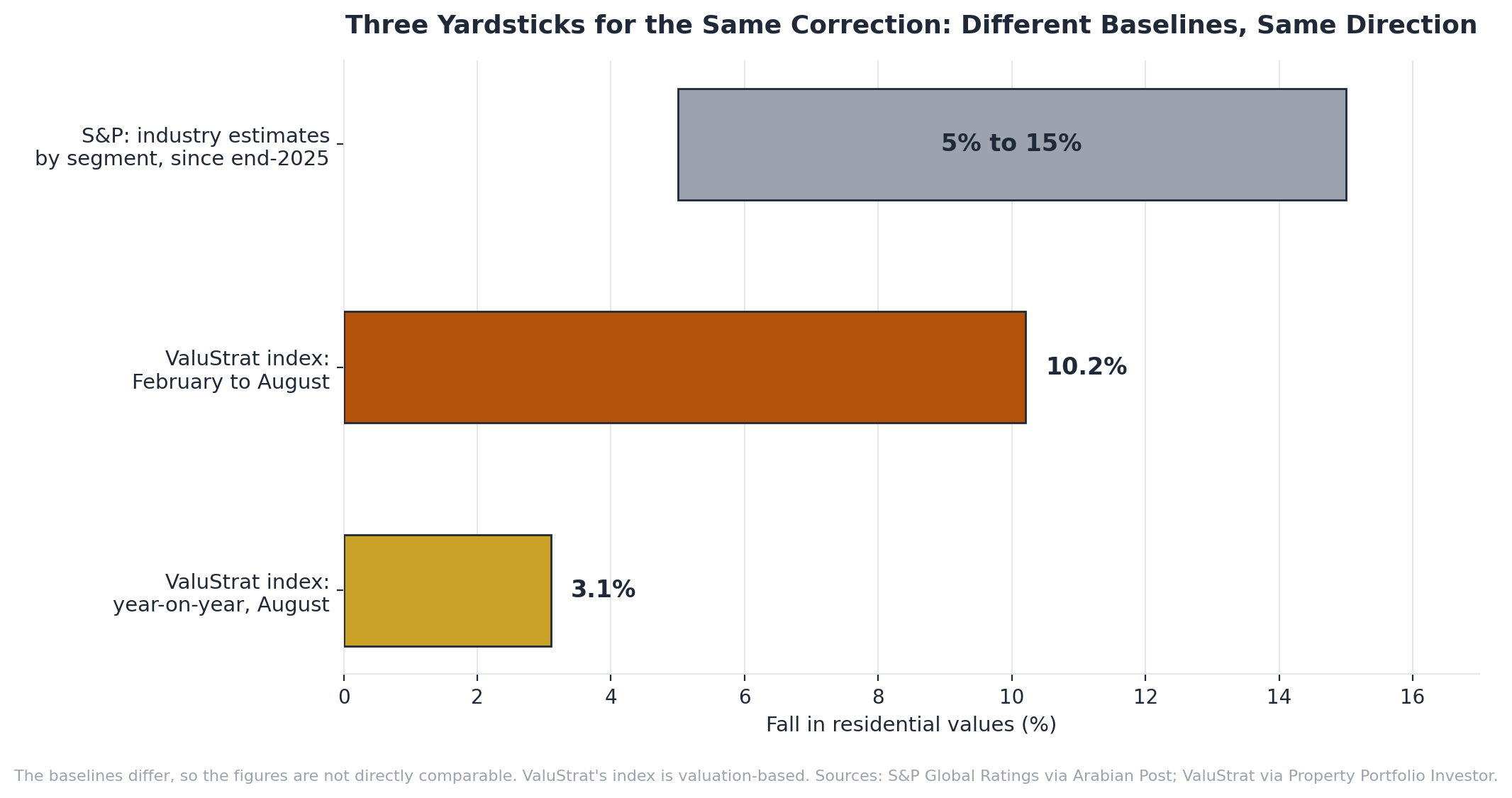
Fig. 3 — Three measures of the correction. The baselines differ, so the figures are not directly comparable, but they point the same way. Sources: S&P Global Ratings via Arabian Post; ValuStrat via Property Portfolio Investor.
S&P also stresses that lower deal volumes do not automatically mean lower values. Volumes are the faster-moving signal, and they have fallen further than prices, which is consistent with the Q3 figures from Cavendish Maxwell (residential sales down 47% in value and 38% in volume year-on-year, which we explain in our guide to reading the Q3 numbers).
Why Apartments, and Why 2027–28
The agency estimates Dubai's residential housing stock could grow by around 20% through 2028 if scheduled construction proceeds without significant delay, with apartments making up a large share. That concentration is the heart of the warning. Investor-driven apartments face the sharpest combination of risks: they are the units most likely to be bought for capital gain rather than to live in, they will compete with newly completed buildings, and they have the weakest prospects for price growth if demand stays subdued.
S&P also flags the secondary market. If investors become more eager to sell existing holdings, more resale listings would compete with developers' new apartment launches. That is a feedback loop worth understanding: weaker prices make some owners want out, and owners wanting out put more weakness into prices.
One caveat applies to every supply figure, including S&P's: it assumes scheduled projects proceed without significant delay. Historically a meaningful share of scheduled homes has arrived late, so actual deliveries may be lower and later than the schedules suggest. Delays soften the supply pressure but create their own problems for buyers waiting on handovers.
Developers: Cushioned for Now, Exposed if It Drags On
S&P rates four Dubai developers: Emaar, Damac, Omniyat and Sobha. It says they retain substantial contracted revenue backlogs and relatively limited payment delinquencies. In practice, that means they keep collecting instalments on homes sold before demand weakened, which protects them even if new sales are soft.
The risk is duration. Sustained uncertainty could increase payment delays from buyers, affect construction schedules and pressure developers' liquidity and funding. The agency is also assessing how capital expenditure and dividends from rated developers might change. Two things are worth keeping in mind. First, these are four large, established names, and the report's reassurance about them does not automatically extend to smaller developers. Second, "limited delinquencies so far" is a statement about today, not a promise.
Banks: Under Review, Not Under Pressure Yet
S&P says it is examining the risks to Dubai banks if the correction becomes more pronounced. The context is that real estate is a major lending line. S&P Global Market Intelligence data from March showed real estate accounting for more than a quarter of the loan books of some of the UAE's largest lenders, with Dubai Islamic Bank at 25.5% and First Abu Dhabi Bank at 25.1% at the end of 2025. The same analysis noted that the largest banks' capitalisation and profitability should help them absorb a significant deterioration in asset quality. The exposure is real; so is the cushion.
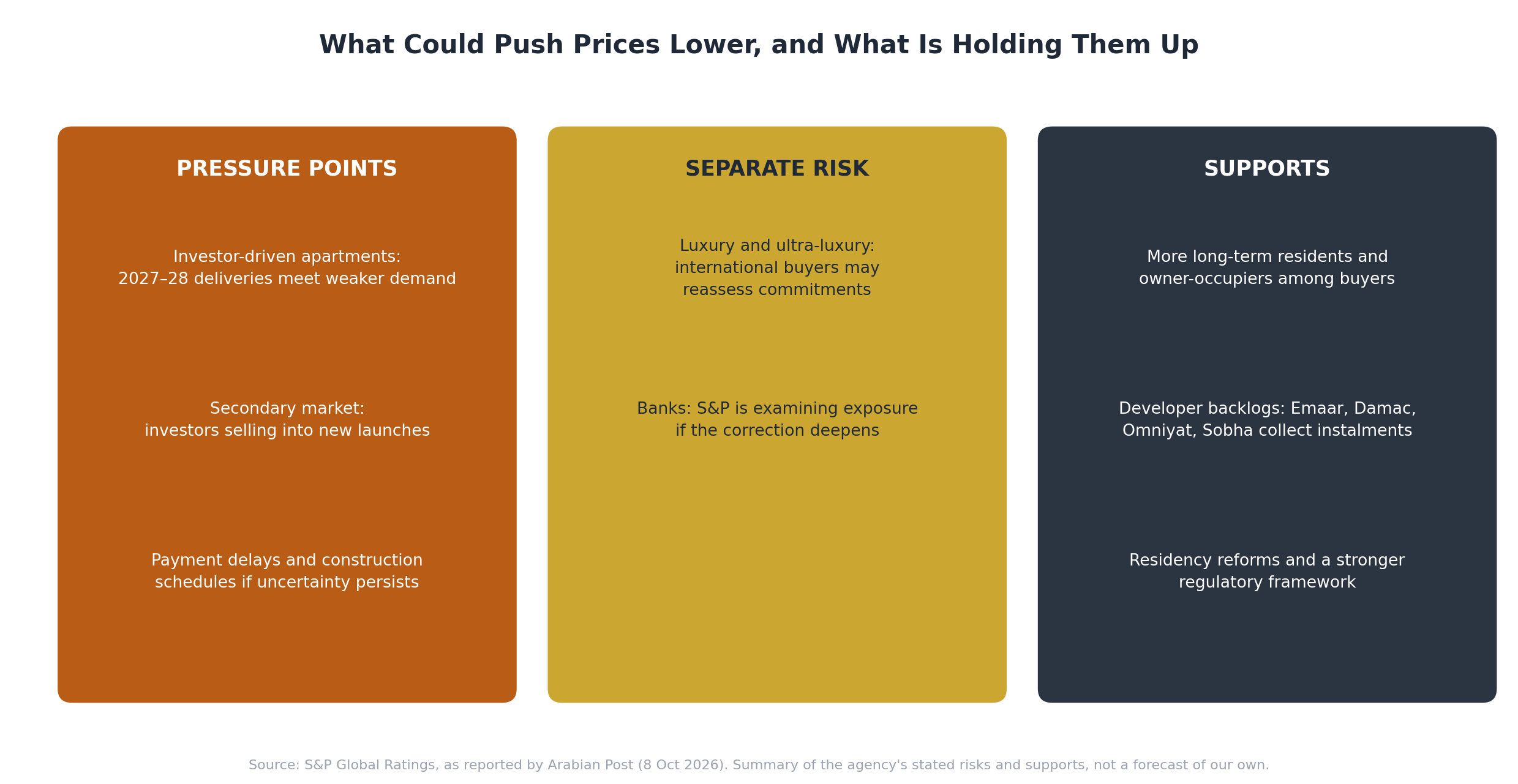
Fig. 4 — What S&P identifies as pressure points and supports. Source: S&P Global Ratings as reported by Arabian Post, 8 October 2026.
What Is Holding the Market Up
S&P attributes the moderate pace of the correction to structural change over several years. The residency reforms, including long-term visas, have shifted the buyer mix towards owner-occupiers and long-term investors, who are less likely to sell quickly under pressure. Population growth, job creation and demand from wealthy international buyers have supported housing demand in several segments, and S&P also points to a stronger regulatory framework. Its summary is that the fall in transactions "warrants monitoring" rather than proving that Dubai has entered a broad downturn.
What Could Change the Outlook
The outlook hinges on the regional situation, which is moving week to week. Gulf equity markets fell on 8 October as tanker attacks in the Strait of Hormuz reached a wartime high, then steadied the following day after the US said it would not attack Iran before next month's midterm elections and that talks were continuing. Dubai's main index has fallen about 9% since the conflict began. S&P's own framing is simple: a base case of continued disruption, and a better case, stabilisation, if risk subsides in 2027. For anyone relying on this analysis, it is worth checking how the situation has moved since the report was published.
What This Means for You
- Own or are buying an investor apartment? This is the segment S&P flags. Compare your building's pipeline of new completions and your exit plan, and be realistic about capital growth over the next two years. Rental yield matters more than appreciation in this scenario.
- Buying off-plan? S&P's comfort about developers rests on buyers continuing to pay instalments. Check the developer's track record, the payment plan and your own ability to keep paying if circumstances change. See also our guide to financing an off-plan purchase during construction.
- Selling? If S&P's base case plays out, competition from new supply and other sellers rises in 2027. Realistic pricing now is a different proposition from waiting for a bounce.
- Buying to live in? The agency's view that owner-occupiers support the market is a reason for measured confidence, and more negotiating room exists than a year ago. Focus on the community and the building rather than the headline.
- At the luxury end? S&P identifies separate risks, mainly that international buyers may reassess commitments. Recent data show the top end still trading, so watch this segment rather than assume either direction.
- Financing a purchase? Borrowing costs rose in September, which adds to affordability pressure. We cover that in our guide to what the Fed hike means for Dubai mortgages.
What to Watch
- Monthly Dubai Land Department data. Whether sales stay near 12,600 a month or recover towards 17,000.
- Handover completions. How much of the scheduled 2027–28 supply actually arrives, and when.
- Payment delinquencies and project delays. The first sign that S&P's cushion is thinning.
- Resale listings. A rise in investors selling would confirm the pressure S&P describes.
- The regional outlook and interest rates. The two external variables that matter most to the base case.
The Bottom Line
S&P's message is neither alarm nor reassurance. It expects a gradual correction concentrated in investor-driven apartments, made worse by supply and by how long the regional disruption lasts, and cushioned by a buyer base that is more rooted than in past cycles and by developers with large contracted revenue. For most people the useful takeaway is specific rather than general: the question is not whether Dubai property goes up or down, but which segment, which building and which time horizon you are in.
Want to see how this applies to a specific building or community? Get in touch and we will walk through the data. For more on the market's recent behaviour, see our fact-check of eight popular claims and our September 2026 market review.
Frequently Asked Questions
What did S&P say about Dubai property prices in 2027?
S&P Global Ratings' base case is that Middle East disruption continues into 2027. Together with large deliveries due in 2027–28, it says that could accelerate the price correction, particularly in investor-driven apartments. If geopolitical risk subsides in 2027, it expects residential prices to stabilise despite the extra supply.
How far have Dubai property prices fallen according to S&P?
S&P cites industry estimates of falls between 5% and 15% across segments since the end of 2025. ValuStrat's valuation-based index, a separate measure, shows residential values about 10.2% below February 2026 and 3.1% below a year earlier as of August.
Is the Dubai property market going to crash?
S&P expects a gradual adjustment rather than a widespread collapse, citing a larger share of long-term residents and owner-occupiers, developers with large contracted revenue backlogs, and a stronger regulatory framework. It also warns that prolonged disruption plus heavy 2027–28 supply could speed up the correction, especially for investor apartments.
Which Dubai developers does S&P rate?
Emaar Properties, Damac, Omniyat and Sobha are the four Dubai developers covered in S&P's assessment. It says they retain substantial contracted revenue backlogs and relatively limited payment delinquencies, though sustained uncertainty could increase payment delays and pressure liquidity.
Are Dubai banks at risk from a property correction?
S&P says it is examining bank exposure if the correction becomes more pronounced. Real estate accounts for more than a quarter of the loan books of some large UAE banks, but earlier S&P analysis noted that the largest banks' capitalisation and profitability should help them absorb a significant deterioration in asset quality.
Statements attributed to S&P Global Ratings are drawn from press coverage of its public Credit FAQ; the full report is available to S&P subscribers. This article is general information, not financial or investment advice, and not a forecast of our own. Conditions in the region are changing quickly; check current developments before acting on any outlook.
