


Quick answer: In August 2026, new residential leases outnumbered renewals in Dubai for the first time since the Dubai Land Department began tracking tenancy data in January 2023 — a swing of 2,139 leases. New tenants signed at rents 15.3% below January levels, while renewing tenants saw rents fall only about 1%, protected (but not discounted) by the RERA Smart Rental Index. This is concentrated in specific high-supply communities — JVC, Arjan, Dubai Silicon Oasis, Discovery Gardens, Sports City, Business Bay, Dubai South, and Dubailand/MBR City — not a citywide rent collapse. The window is already narrowing as October's seasonal demand returns, so if you're planning a move, the next few weeks matter more than usual.
Every September, Dubai's rental market goes quiet — residents are back from summer, decision-making slows, and landlords generally hold firm until the autumn rush. What happened in August 2026 broke that pattern in a way the data had never shown before.
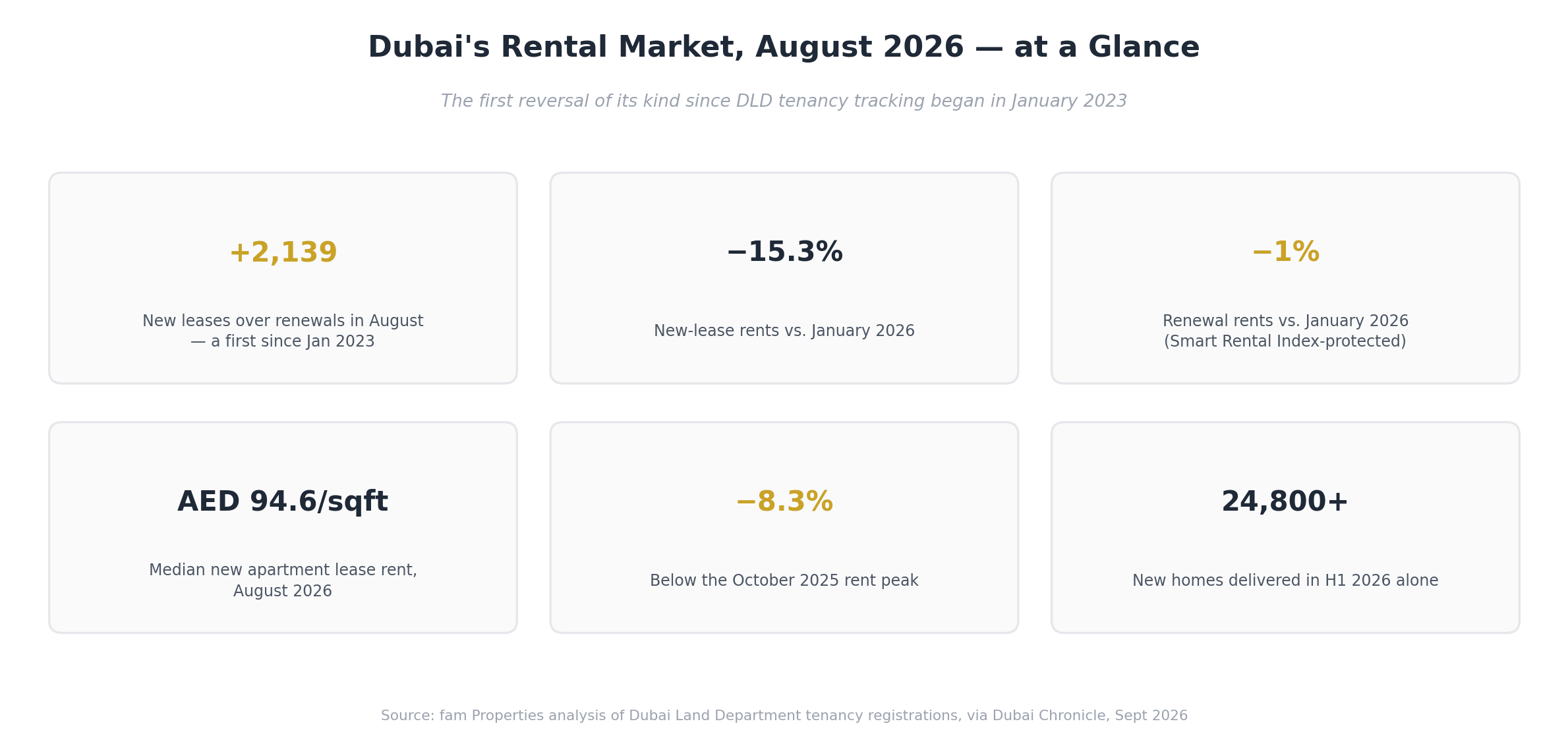
Fig. 1 — Dubai's rental market in August 2026, in six numbers — the first new-lease-over-renewal reversal since DLD tenancy tracking began. Source: fam Properties analysis of Dubai Land Department tenancy registrations, via Dubai Chronicle, Sept 2026.
The Reversal, in Context
Dubai Land Department tenancy registrations, analysed by fam Properties, show new leases outnumbered renewals by 2,139 in August 2026. That doesn't sound like a huge number on its own — until you see where the market was just months earlier. In Q1 2026, renewals outnumbered new leases by 17,222 (135,607 renewals against 118,385 new contracts) — the normal pattern, where most tenants stay put and renew.
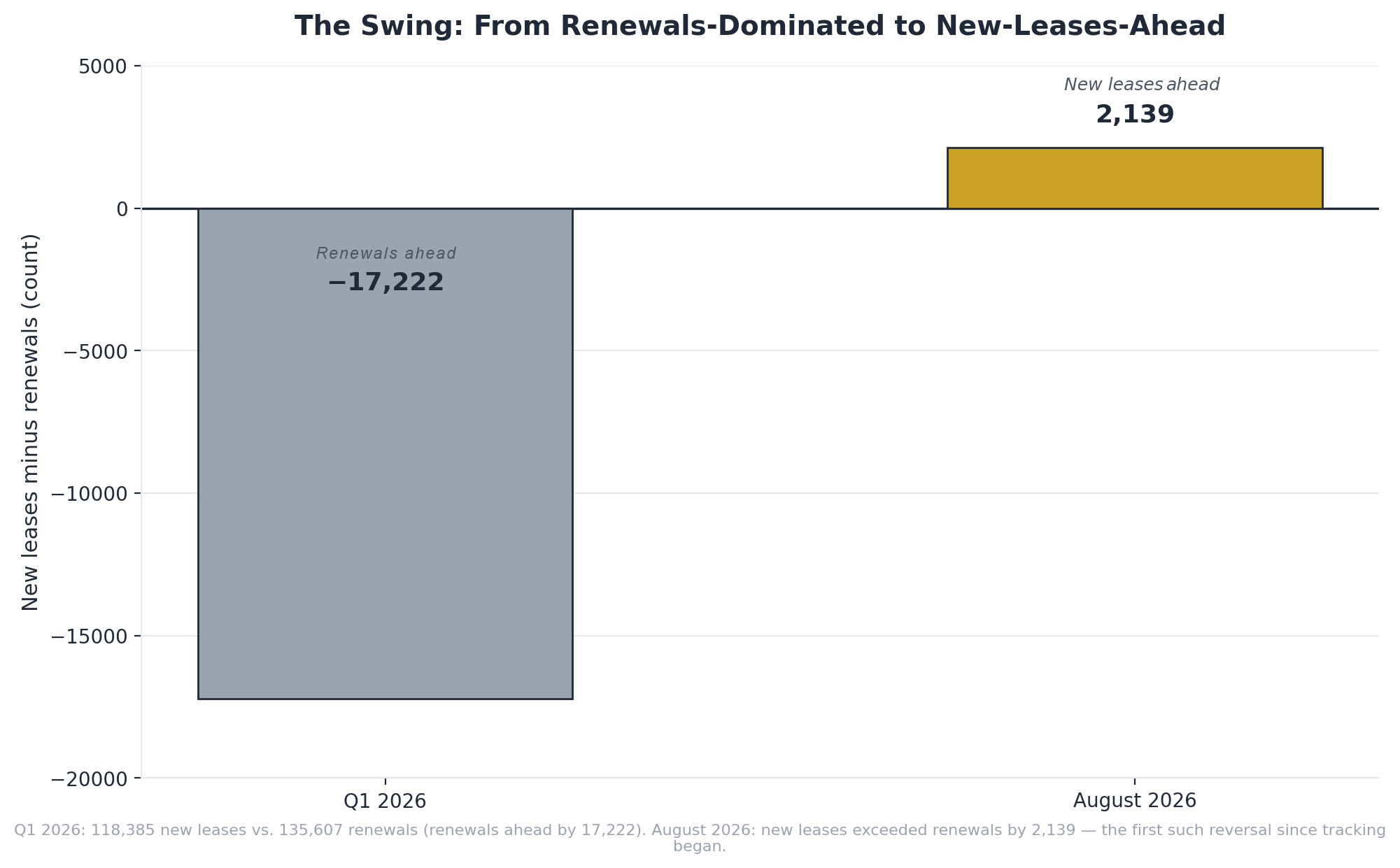
Fig. 2 — The swing from a renewals-dominated Q1 to a new-leases-ahead August is the clearest single signal that something structural changed in Dubai's rental market this year.
That's a genuinely large swing within a single year, and it lines up with what brokers on the ground have been describing since at least June: a market where, for the first time in years, tenants rather than landlords are setting the pace on new deals.
Why This Is a Supply Story, Not a Demand Story
The honest read here matters, because "tenants gaining leverage" can sound like it means demand is collapsing. It doesn't. Dubai delivered more than 24,800 new homes in H1 2026 alone, with a scheduled pipeline of roughly 162,500 units for 2027 and 128,200 for 2028 still to come. That's a genuine supply wave, concentrated heavily in mid-market apartment communities — exactly where the new-lease discounts are showing up.
Population and tourism demand haven't reversed; the number of homes competing for tenants has simply grown faster than it has in years. That's a meaningfully different story from a demand-side downturn, and it changes what you should expect going forward: more supply converting into more tenant choice, not a broader economic signal.
Same Building, Two Very Different Deals
The most practically useful fact in this entire story is how differently new leases and renewals have behaved, even within the same buildings.
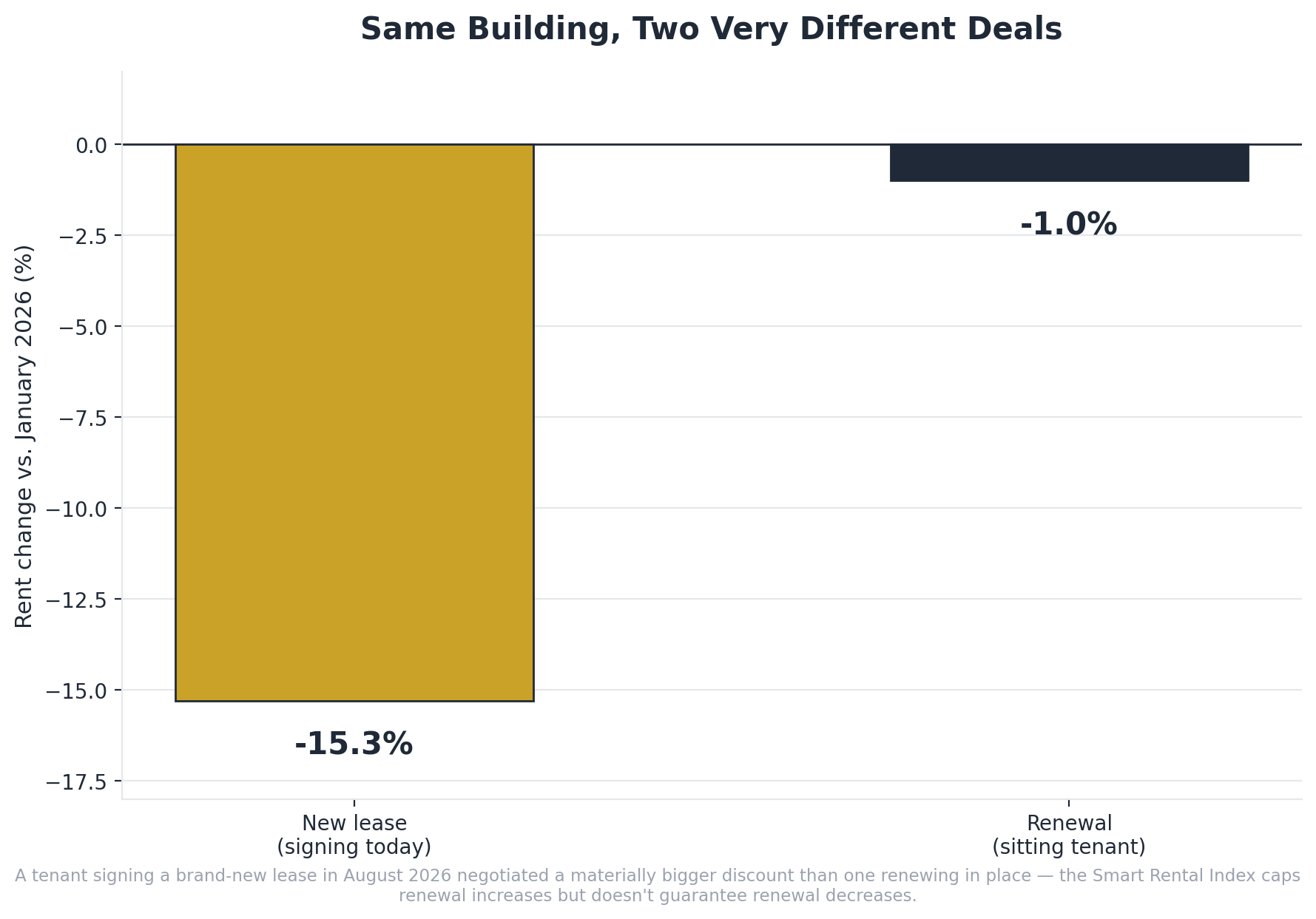
Fig. 3 — A tenant signing a new lease in August 2026 captured a discount roughly fifteen times steeper than one renewing in place. The Smart Rental Index caps how much a renewal can increase — it doesn't guarantee a renewal gets cheaper.
This is structural, not accidental. RERA's Smart Rental Index exists to protect sitting tenants from steep increases, and it's doing exactly that — renewal rents have barely moved. But the index has nothing to say about brand-new leases, where landlords are competing directly against every other vacant unit in the building and the surrounding community. The practical upshot: if you're comfortable where you are, the index is quietly protecting you. If you're willing to move, the market is currently rewarding that willingness far more generously than it has in years.
Where the Leverage Actually Is
This cooldown is sharply concentrated by community, and treating it as a citywide phenomenon will lead you to the wrong conclusion about a specific building or area.
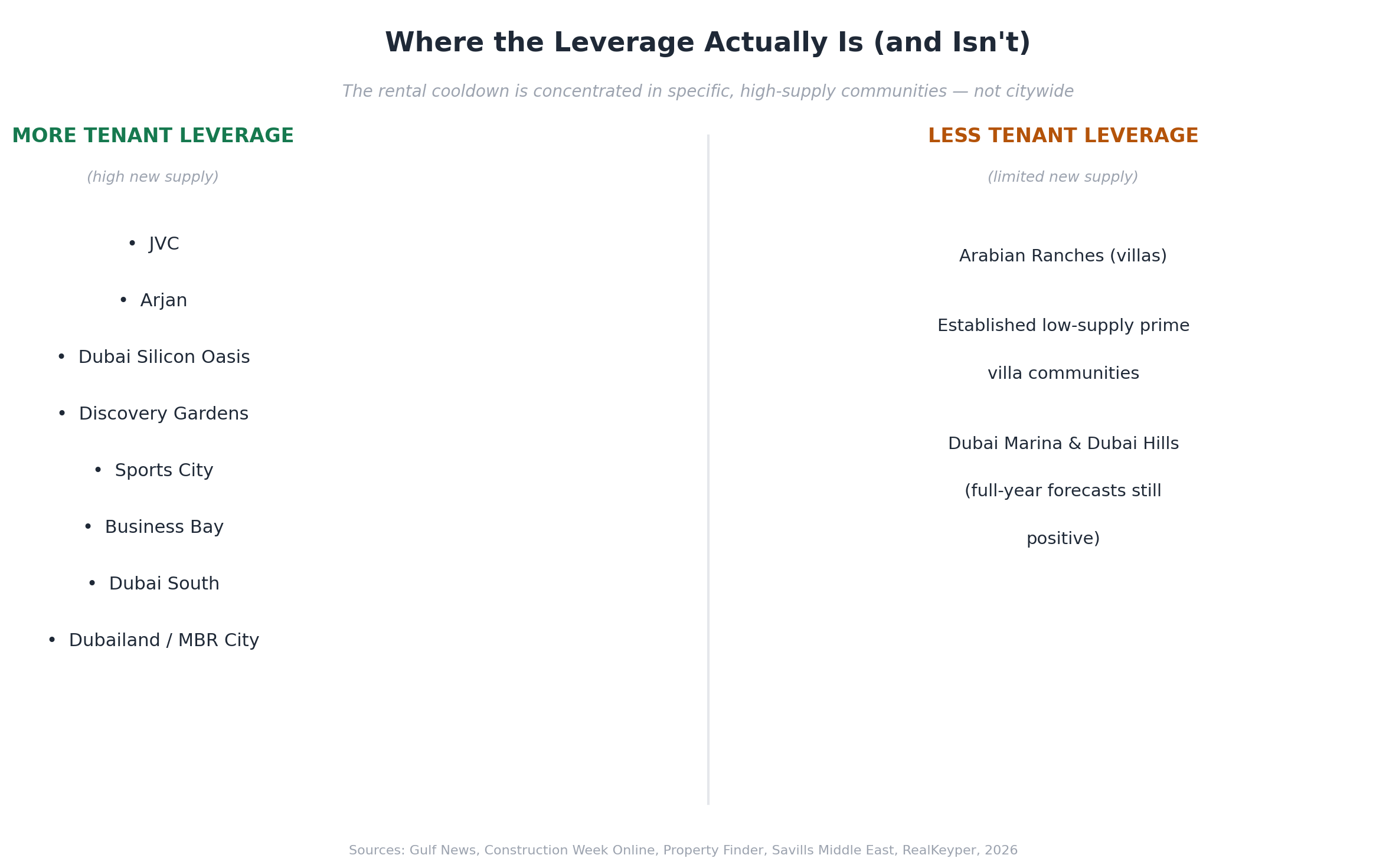
Fig. 4 — Tenant leverage is heavily concentrated in communities absorbing the bulk of 2026's new supply. Prime, low-density, and villa-heavy communities are telling a very different story.
JVC, Arjan, Dubai Silicon Oasis, Discovery Gardens, and Sports City are absorbing the heaviest apartment handover volumes, and landlords there are competing on more than headline rent — flexible payment schedules, reduced or waived security deposits, rent-free periods, and upgraded amenities are all becoming standard retention and acquisition tools. Business Bay and Dubai South are described as "closely watched" by brokers for the same reason, given the scale of incoming supply. By contrast, villa communities like Arabian Ranches, and other established low-supply prime areas, are seeing essentially none of this softening — limited new stock keeps pricing firm regardless of what's happening in apartment-heavy districts. Interestingly, even some apartment-forward areas like Dubai Marina and Dubai Hills Estate show positive full-year rent forecasts, a reminder that "two-speed market" applies within the apartment segment too, not just apartments-versus-villas.
One More Lever Worth Knowing: Monthly Rent Payments
Separately from the supply story, Dubai has also rolled out a "Flexi Rent" initiative, working with a group of partner companies to let tenants pay rent monthly rather than the traditional one or two post-dated cheques per year. It doesn't change the headline rent, but it meaningfully changes the cash-flow pressure of renting in Dubai — worth asking about specifically if upfront cash is your main constraint rather than the total annual figure.
What This Means for You
- Looking to move into JVC, Arjan, Dubai Silicon Oasis, Discovery Gardens, Sports City, Business Bay, or Dubai South? This is close to the most tenant-favourable moment in several years for these specific communities — but brokers are already flagging that the window narrows as October's seasonal demand returns, so treat the next few weeks as the priority, not "sometime this quarter."
- Renewing in place? The Smart Rental Index is protecting you from a steep increase, but it isn't going to hand you the same discount a new tenant is getting next door. If you want that discount, you generally have to be willing to actually move.
- Looking at a villa or a prime, low-supply community? Don't expect this leverage to apply — pricing there is being driven by a completely different, much tighter supply picture.
- A landlord in a high-supply community? Competing purely on headline rent is increasingly a losing strategy — flexible payment terms, waived fees, and amenity upgrades are what's actually retaining tenants right now.
- Cash-flow constrained as a tenant? Ask whether your building participates in the Flexi Rent monthly payment scheme before assuming the only options are one or two cheques a year.
The Bottom Line
August 2026 marked a genuine first: more new leases than renewals, for the first time since Dubai began tracking this data. It's a real shift in negotiating power, but a targeted one — concentrated in specific high-supply apartment communities, driven by a genuine construction wave rather than any weakening in underlying demand, and already showing signs of narrowing as the autumn season brings renewed competition for the same units. If you're in a position to act, the data says the next few weeks matter more than they have in years.
Thinking about a move, or wondering whether your specific building fits this pattern? Get in touch for a straight read on your community, not a citywide generalisation. For the bigger 2026 market picture, see our reads on where Dubai's market stood this September and August's full transaction breakdown.
Frequently Asked Questions
Are Dubai rents actually falling in 2026?
It depends on whether you're signing a new lease or renewing. New leases in August 2026 were signed roughly 15.3% below January levels in high-supply communities. Renewal rents, protected by the RERA Smart Rental Index, fell only about 1% over the same period. There is no citywide rent collapse — the softening is concentrated in specific apartment-heavy districts.
Which Dubai communities have the most tenant negotiating power right now?
JVC, Arjan, Dubai Silicon Oasis, Discovery Gardens, Sports City, Business Bay, and Dubai South are seeing the most tenant leverage, driven by heavy new supply. Villa communities and established low-supply prime areas are seeing little to none of this effect.
Why do new leases now outnumber renewals in Dubai?
Primarily new supply. Dubai delivered more than 24,800 new homes in the first half of 2026 alone, with a further 162,500 units scheduled for 2027. That supply is concentrated in mid-market apartment communities, giving tenants more choice and pushing landlords to compete more aggressively on new leases than they need to on renewals.
Will Dubai's rental market stay this tenant-friendly?
Brokers are already noting that the negotiating window narrows as October's seasonal demand returns, when residents come back from summer and viewing activity picks up. The underlying supply wave is expected to continue into 2027 and 2028, but the day-to-day negotiating leverage within any given month can shift with seasonal demand.
What is Dubai's Flexi Rent scheme?
A Dubai Land Department-backed initiative working with a group of partner companies to let tenants pay rent in monthly instalments rather than the traditional one or two post-dated cheques per year. It addresses cash-flow timing rather than the total rent amount.
Figures are drawn from DLD-sourced data as reported by the outlets above; where sources vary slightly in methodology, this article uses the most recent and most directly DLD-attributed figures. Always verify current rent levels for a specific building via the RERA Rental Index calculator before signing or renewing a lease.
